Epoxy flooring Townsville turns a tired, dusty concrete slab into a hard-wearing, easy-to-clean surface built for North Queensland’s heat, humidity, and heavy use. Whether you’re coating a garage in Kirwan, a workshop floor in Bohle, or a warehouse in Garbutt, a properly installed epoxy system resists oil, chemicals, and constant foot or vehicle traffic far better than paint or bare concrete ever will. Local homes and businesses choose it because it’s tough, it’s easy to keep clean, and it looks sharp for years after installation. This guide covers everything worth knowing about Epoxy Flooring Townsville properties actually need, from what the material is made of through to cost, maintenance, and when to call in a professional.
What Is Epoxy Flooring?
Epoxy flooring is a resin-based coating system applied over concrete to create a seamless, chemical-resistant surface. It starts as two separate components, an epoxy resin and a hardener, which react together once mixed to form a rigid, plastic-like material. Unlike paint, which sits on top of the surface and eventually wears through, cured epoxy bonds mechanically into the pores of the concrete and forms a genuinely hard-wearing layer that handles vehicle traffic, dropped tools, and constant foot traffic without chipping away.
Most epoxy floor systems in Townsville use two or three layers. A primer coat soaks into the concrete and seals it, a base or build coat provides the colour, thickness, and strength, and a topcoat protects the whole system from UV exposure and abrasion. Some setups add a broadcast layer of coloured flakes or quartz between the base coat and the topcoat for extra grip and a decorative finish. Each layer needs to cure properly before the next goes on, which is part of why epoxy flooring is a job best left to people who do it every day. This is also where epoxy used with concrete rather than as separate materials. The concrete provides structure and strength, while the epoxy provides the surface properties: chemical resistance, easy cleaning, and a finish that doesn’t dust or crack the way bare concrete does over time.
Choosing an Epoxy Flooring Company in Townsville
At Townsville Flooring Experts, our epoxy flooring systems are selected to suit the specific demands of each environment. We considere factors like traffic loads, chemical exposure, hygiene requirements and aesthetic preferences. We work with premium systems from trusted suppliers including Sika, Epirez and Duron, and our team has the on-the-ground experience to specify and install the right product every time.
Not every epoxy flooring company works to the same standard, and the difference shows up within a year or two of installation. A proper installer starts with a moisture test on the slab, because Townsville’s high humidity and water table in low-lying suburbs can push moisture vapour up through concrete that looks perfectly dry on the surface. Skip that step and even a well-applied epoxy coating can blister or delaminate within months.
Ask any company you’re considering how they prepare the concrete. Diamond grinding or shot blasting opens up the surface profile so the epoxy has something to grip. Acid etching is cheaper and faster, but it doesn’t remove old sealers, oil staining, or laitance nearly as well, and it’s a common reason DIY and budget jobs fail early. A company that skips mechanical preparation is cutting a corner that you’ll pay for later.
Our team consists of skilled and certified flooring experts who are capable of installing all types of epoxy flooring. All of our floors come with a minimum 10 years warranty.
How Epoxy Flooring Works
Epoxy flooring relies on a chemical reaction, not just drying like paint does. Installers mix the resin and hardener in a specific ratio, and once combined, the two begin curing through a process called cross-linking, where the molecules bond together into a dense, solid polymer. This is why pot life matters so much on site. Once installers mix the two parts, they have a limited window, often 20 to 40 minutes depending on the product and the temperature, to spread it before it starts to thicken and set.
Temperature and humidity both affect how epoxy cures, which is a genuine consideration in North Queensland. Warmer temperatures speed up the reaction, sometimes too much, shortening the working window and making it harder to achieve an even finish. In Townsville, we plan epoxy flooring installations very carefully around humidity and temperature. Our experts install flooring during cooler hours and using moisture-tolerant systems where the substrate hasn’t fully dried out.
Once applied, epoxy goes through several stages. It’s typically touch-dry within a matter of hours, walkable in light socks the next day, and ready for normal foot traffic within two to three days. Full chemical cure, the point where the floor reaches its maximum hardness and chemical resistance, generally takes around seven days. Driving a vehicle onto a new epoxy garage floor before that full cure period is one of the most common ways an otherwise good installation gets marked or scuffed early on.
Our Epoxy Flooring Townsville Process, Step by Step
Every job starts with an inspection. We check the slab’s age, look for existing cracks or contamination, and run a moisture test before quoting, because what’s underneath the surface determines what preparation the job actually needs. This step alone rules out a lot of guesswork and stops nasty surprises once work is underway.
Surface preparation comes next, and it’s the stage that decides whether the finished floor lasts five years or fifteen. We grind the concrete with diamond tooling to remove old coatings, oil contamination, and laitance, and to open up a surface profile the epoxy can key into. We fill any cracks or holes with an epoxy or polyurea crack filler and level them off before moving any further.
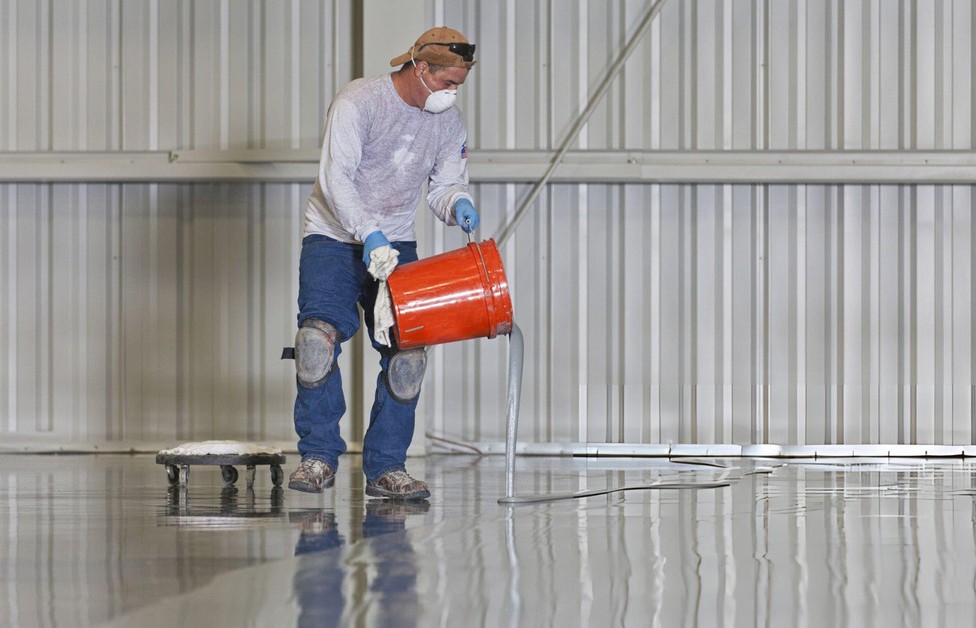
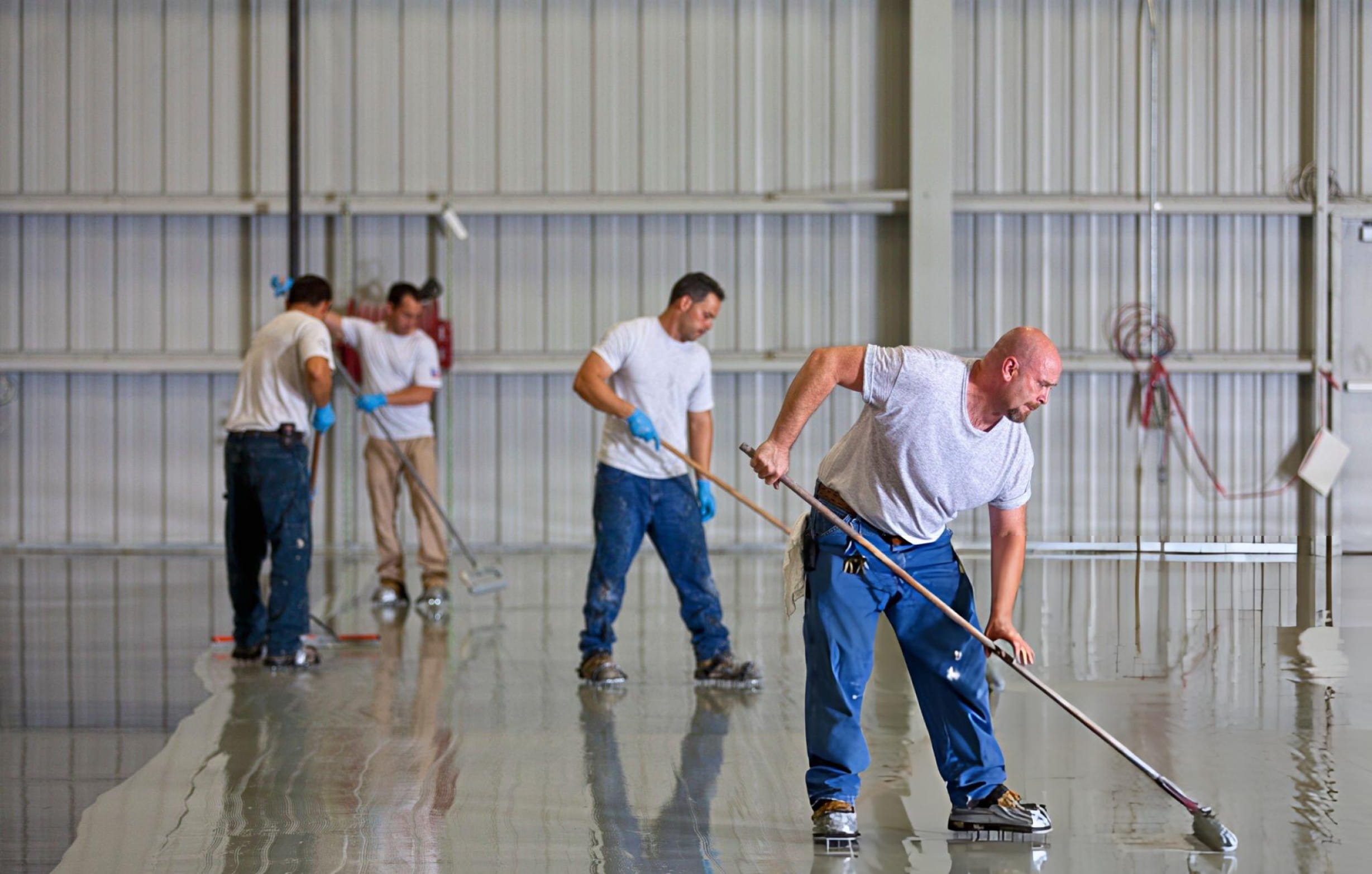
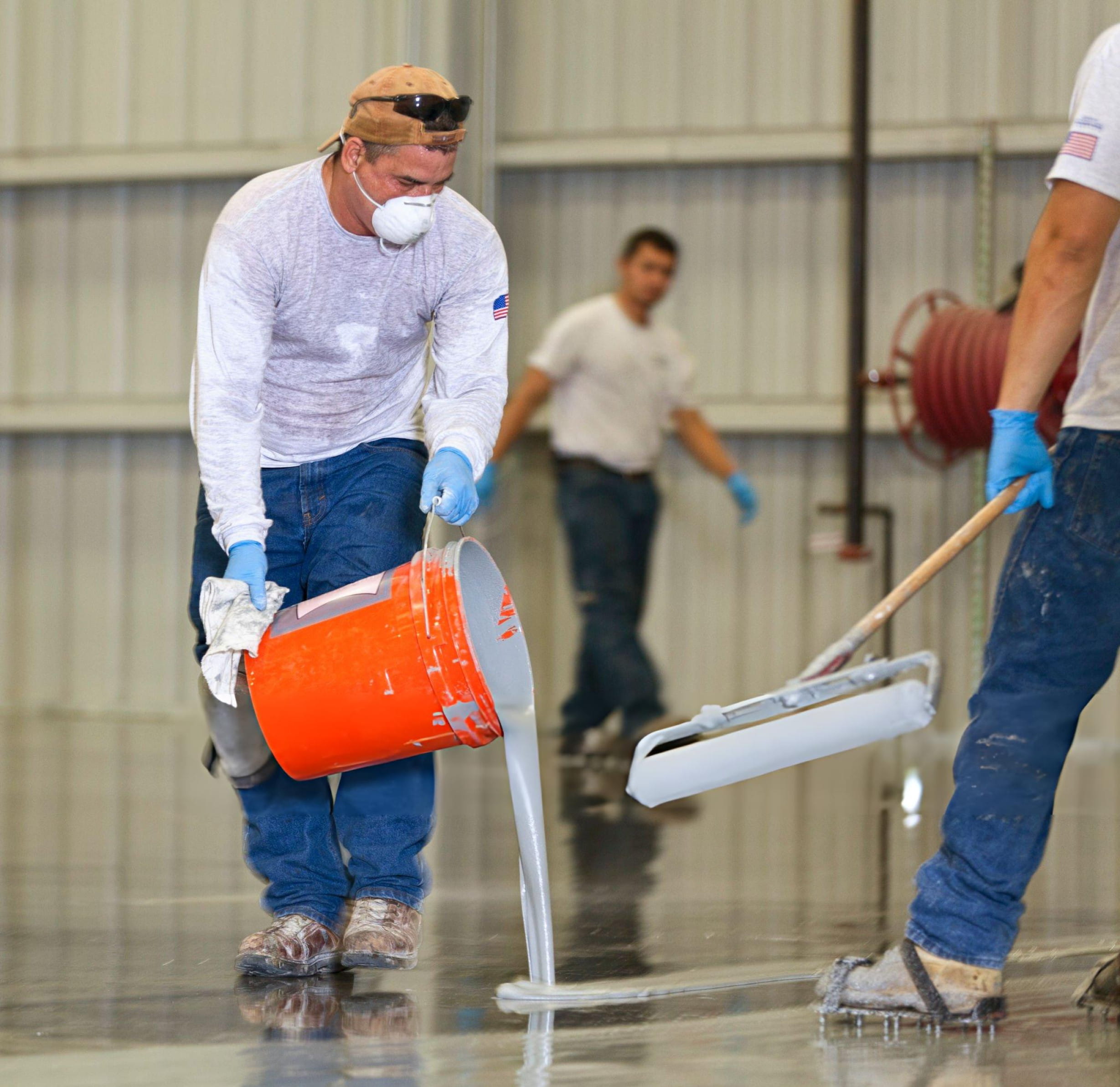
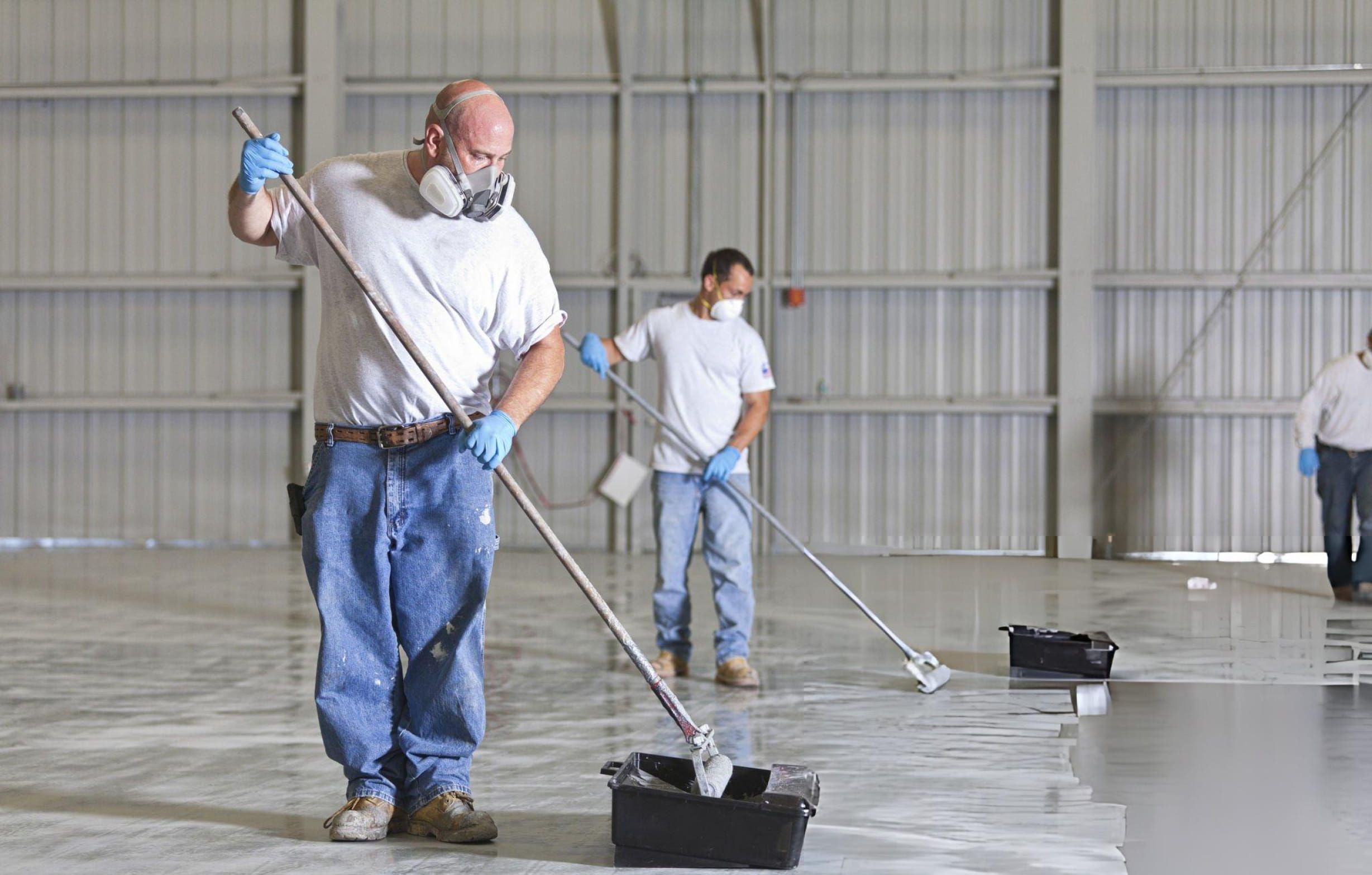
With the slab prepped, we apply a penetrating primer to seal the concrete and lock down any remaining dust. Once that cures, we apply the base coat by roller or squeegee depending on the area, and this is where the colour and body come from. For garages, showrooms, and other spaces where extra texture or a decorative look is wanted, we broadcast coloured flake or quartz media into the wet base coat at this stage.
The final layer is the topcoat, usually a polyurethane or polyaspartic sealer chosen for UV stability, which matters more in Townsville than almost anywhere else in the country given how much direct sun local floors cope with. This topcoat stops the colour from yellowing or chalking over time and adds the abrasion and chemical resistance that makes the whole system worth installing. We finish with a walkthrough, checking edges, corners, and coverage before handing the space back over, with clear guidance on cure times before it goes back into full use.
Why Homeowners Choose Townsville Flooring Experts for Flooring
An epoxy coating is only as good as its installation. DIY kits are easy to find at any hardware store, and the marketing makes the job look simple: clean the floor, mix the two parts, roll it out, done. In practice, most kit failures trace back to the same handful of causes, and they’re the same issues a professional installer is trained to catch before they become a problem.
Surface preparation is the biggest gap. Hardware store kits usually recommend a quick acid etch or a light clean, which does very little to open up the concrete’s surface profile compared with diamond grinding. Without proper mechanical prep, the epoxy sits on top of the slab rather than bonding into it, and it’s only a matter of time before it starts peeling at the edges or lifting in high-traffic spots.
Moisture is the second big issue, and it’s a genuine risk in a tropical climate like Townsville’s. Concrete slabs, especially older ones without a proper vapour barrier underneath, can push moisture up through the slab even when the surface feels bone dry. That trapped moisture has nowhere to go once the coating seals it in, and it shows up later as bubbling, cloudy patches, or a coating that lifts clean off the concrete in sheets.
Then there’s material quality and mixing accuracy. Manufacturers formulate trade-grade epoxy coatings differently to retail kits, with better UV stabilisers, higher solids content, and more predictable working times. Professional installers also have the experience to read conditions on the day, adjusting for heat and humidity, and the equipment, from diamond grinders to airless sprayers, to apply the coating evenly across a whole floor rather than in patches. The result is a floor built to handle vehicles, workshop use, or years of daily foot traffic, with a warranty behind it if something does go wrong.
Common Questions About Epoxy Flooring
Most people considering an epoxy floor want to know how it holds up day to day, and the honest answer is that it holds up extremely well when installed correctly. A cured epoxy floor shrugs off motor oil, brake fluid, most household chemicals, and general wear from vehicles or foot traffic. It won’t crack the way bare concrete can, and because the surface is seamless, there are no grout lines or joints for dirt, oil, or moisture to collect in.
Slip resistance comes up a lot, particularly for garages, workshops, and commercial kitchens. A plain, glossy epoxy floor can be slippery when wet, but adding a fine anti-slip aggregate into the topcoat or choosing a textured flake finish solves this easily, and both are standard options rather than costly upgrades. For more information on reducing slip hazards, see WorkSafe Queensland’s slip-resistant flooring guidance.
Heat is another common concern in North Queensland, and fairly so. Direct summer sun through a garage door or on an exposed alfresco slab can make a floor hot enough that parked tyres soften slightly and stick to the surface, a well-known industry issue called hot tyre pick-up. It doesn’t damage the floor structurally, but it can leave temporary marks. Choosing the right topcoat and finish reduces this, and it’s worth raising with your installer if you’re coating a garage that gets a lot of direct sun.
People also ask how epoxy compares with polished concrete or tiles. Epoxy is generally more affordable to install than polished concrete, offers far more colour and finish options, and unlike tiles, has no grout lines to clean or crack. Its main trade-off is that damaged sections are harder to patch invisibly than a single cracked tile is to replace.
Epoxy Flooring: The Details That Matter
Beyond installation, a few practical details help you make the right decision and keep your floor looking good for years.
Epoxy Flooring Colours and Finishes
Solid colour epoxy is the most common choice for garages and workshops, available in a wide range of tones to match a shed, showroom, or driveway extension. For a more decorative option, flake systems broadcast coloured chips into the base coat for a mottled, textured look that also improves grip. Metallic epoxy is popular for showroom floors and feature areas, using pigments that create a rippled, almost three-dimensional finish under light.
If you’re deciding between a painted look and a full epoxy system, it’s worth understanding the difference. Standard epoxy floor paint is thinner, cheaper, and easier to apply as a DIY option, but it wears faster and offers less chemical resistance than a proper multi-coat epoxy system. For high-traffic garages or anywhere chemicals and oil are a regular presence, the extra durability of a full system is usually worth the difference in price.
If you’re comparing finishes before making a decision, our guide to epoxy floor paint colours and finishes explains which options work best for garages, workshops, and living spaces.
Epoxy Flooring Townsville Cost
Cost depends on the size of the area, the condition of the existing concrete, and the system you choose. As a general guide, a standard two-coat epoxy system over well-prepared concrete starts from around $35 to $50 per square metre. Most Townsville garages, which usually need diamond grinding, crack repair, and a UV-stable topcoat given how much direct sun local garages get, land somewhere between $60 and $120 per square metre. Before choosing a finish, compare the most popular epoxy floor paint colours to find one that matches your space and maintenance preferences.
These figures are a general guide, not a fixed quote. Slab condition makes the biggest difference to price. A cracked, oil-stained, or previously coated floor needs more grinding and repair work before a new system goes down, which adds labour and materials regardless of the final finish chosen. The only reliable way to know your Epoxy Flooring Townsville cost is a site inspection, since photos and phone descriptions rarely capture what a moisture test and a close look at the slab will.
Epoxy Flooring Services in Townsville
We coat garage floors, workshops, sheds, and alfresco areas for homeowners across Townsville, along with warehouses, showrooms, and retail spaces for local businesses. Each of these has different demands. A showroom floor needs a finish that looks good under lights and handles foot traffic, while a warehouse floor needs to cope with forklifts, pallet jacks, and constant point-loading without cracking or peeling.
For businesses working with older or damaged slabs, commercial epoxy flooring systems can restore a warehouse or commercial floor without the cost and downtime of replacing the concrete itself.. We also handle line marking for safety zones and walkways, anti-slip additives for wet areas like wash bays, and food-safe systems for commercial kitchens where hygiene certification matters.
Epoxy Floor Replacement
Not every failing floor needs a full replacement. If the epoxy is peeling at a few edges or has isolated damage, a spot repair or a fresh topcoat is often enough to bring it back. Full replacement becomes necessary when delamination is widespread, when the original installation skipped proper surface prep, or when the concrete slab itself has moisture problems nobody addressed the first time around.
Replacing an existing epoxy system means grinding off the old coating completely before starting fresh, since a new layer won’t bond properly over failing epoxy underneath. It’s more work than a first-time installation on bare concrete, but it’s still generally more cost-effective than replacing the slab. If you’re unsure whether your floor needs full cement floor epoxy coating replacement or just a repair, an inspection usually tells you within minutes which category the damage falls into.
Epoxy Floor Repair
Small chips, scuffs, and scratches are common in high-traffic garages and workshops, and most are straightforward to fix. A repair usually involves grinding back the damaged section, feathering the edges so the patch blends in, and reapplying matching base coat and topcoat layers. Colour matching is easier with solid colours than with flake or metallic finishes, where getting an invisible repair takes more skill.
Cracks that appear after installation are worth investigating rather than just patching over. A crack in the epoxy usually means the concrete underneath has moved or cracked first, so the fix needs to address the slab, not just the surface coating. Filling a structural crack with flexible epoxy or polyurea filler before recoating stops it from telegraphing straight back through the new surface within a few months.
Epoxy Floor Maintenance
Epoxy flooring is genuinely low-maintenance compared with tiles or timber, but a little care extends its life considerably. Regular sweeping keeps grit from scratching the surface over time, and a mop with warm water and a pH-neutral cleaner handles most day-to-day dirt and spills. Avoid ammonia-based or highly acidic cleaning products, since repeated use can dull the topcoat’s sheen over the years.
In garages, use furniture pads or trolley wheels rather than dragging heavy tools or equipment across the floor, and mop up oil, fuel, or chemical spills promptly even though epoxy resists staining far better than bare concrete. During Townsville’s hottest months, parking on rubber mats can help prevent hot tyre pick-up on a garage floor that gets direct afternoon sun. For commercial floors under constant heavy use, a fresh topcoat every five to ten years keeps the surface looking new and maintains its full chemical resistance.
Frequently Asked Questions
What is the downside of epoxy flooring?
The main downsides are that it can be slippery when wet without an anti-slip additive, it’s unforgiving underfoot compared with softer flooring, and it depends heavily on correct installation. A poorly prepped or poorly cured epoxy floor can peel, bubble, or yellow under UV exposure, which is why the quality of the installer matters as much as the product itself. In hot climates like Townsville’s, low-grade topcoats can also suffer from hot tyre pick-up in garages that get direct sun.
Is it expensive to epoxy a floor?
Epoxy flooring costs more upfront than a basic paint job, but it’s generally cheaper than tiling or polished concrete once you account for installation and lifespan. A quality system properly installed can last ten to twenty years with minimal upkeep, which brings the cost per year down well below most alternative flooring options. The real expense comes from skipping proper preparation and having to redo a failed job within a couple of years.
How much is epoxy flooring per m2 in Australia?
Professionally installed epoxy flooring in Australia typically costs between $35 and $120 per square metre, depending on the system and how much surface preparation the slab needs. Basic two-coat systems sit at the lower end, while decorative flake or metallic finishes with a UV-stable topcoat sit toward the upper end. A site inspection is the only reliable way to know your actual cost, since slab condition affects price more than almost any other factor.
Can I DIY an epoxy floor?
You can, and hardware store kits are widely available, but most DIY failures come down to inadequate surface preparation and skipping a moisture test. Without diamond grinding or an equivalent mechanical prep, epoxy struggles to bond properly to the concrete, and the result often starts peeling or bubbling within a year or two. For small, low-traffic areas, DIY can work reasonably well, but garages, workshops, and anywhere with vehicle traffic usually do better with a professional installation.
When should you not use epoxy?
Epoxy isn’t the right choice for areas with ongoing moisture problems in the slab that nobody has fixed, since trapped moisture eventually causes bubbling or delamination no matter how well installers apply the coating. It’s also not ideal directly over timber or flexible substrates without the correct primer system, and it’s not a great fit if you want a warm, soft surface underfoot in a living space. Outdoor areas with constant harsh sun need a UV-stable topcoat like polyurethane or polyaspartic, or a plain epoxy base will yellow and chalk over time.